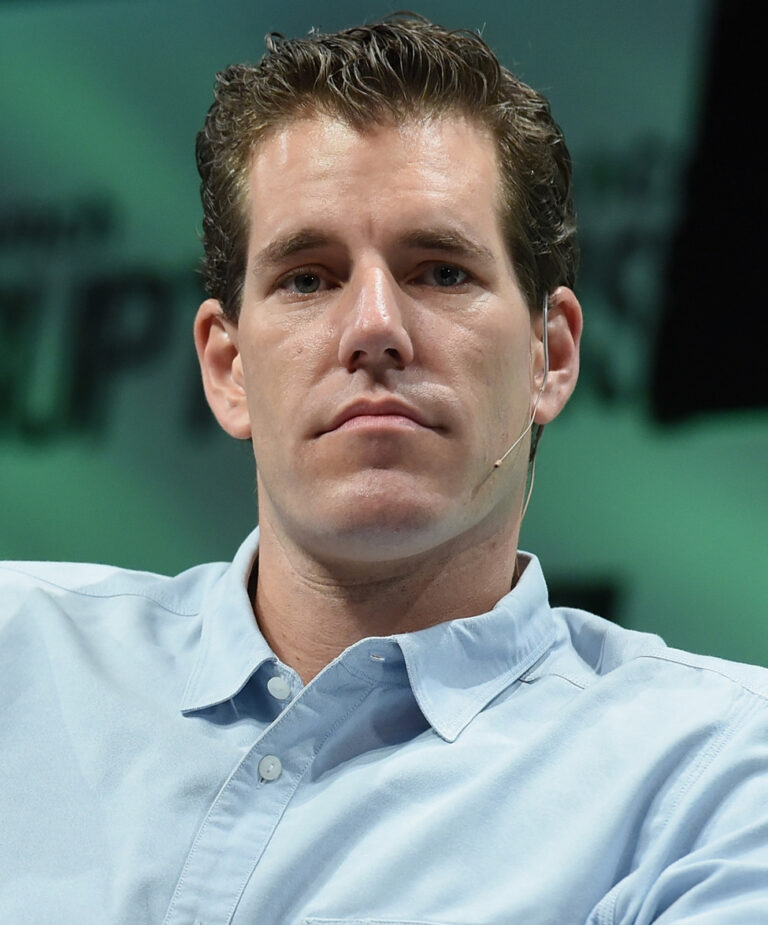
Cameron Winklevoss
American businessman and rower
$4.4 Billion
No Pic
Stanley Druckenmiller
American investor and philanthropist (born 1953)
$7.8 Billion
📏 Scale & Comparison Visualizer
Cameron Winklevoss (193 cm)
Stanley Druckenmiller (175 cm)
C2
⚡ Cameron Winklevoss is 18 cm taller than Stanley Druckenmiller
FameSpec Algorithmic Verdict
Deadlock Draw (Evenly Matched)
Both public figures hold matched statistical metrics across measured fields.
| Cameron Winklevoss | METRIC | Stanley Druckenmiller |
|---|---|---|
| $4.4 Billion | NET WORTH | $7.8 Billion |
| 6 ft 5 in (193 cm) | HEIGHT | N/A |
| N/A | YOUTUBE | N/A |
| N/A | N/A | |
| @winklevoss | X (TWITTER) | N/A |
| Aug 21, 1981 (Age 45) | BIRTH DATE | Jun 14, 1953 (Age 73) |
| Southampton | BIRTH PLACE | Pittsburgh |
⚡ Head-to-Head Polarities: Superpowers vs. Kryptonite
✦ Cameron Winklevoss
🟢 Core Superpowers
- ✦ Early visionary conviction in emerging technology, notably pioneering institutional Bitcoin adoption and Web3 infrastructure.
- ✦ Elite discipline and resilience forged through Olympic-level rowing and protracted high-stakes corporate disputes.
- ✦ Commitment to compliance and security, establishing Gemini as a regulatory-focused bridge between traditional finance and crypto.
🔴 Critical Vulnerabilities
- ✖ High exposure to severe counterparty failures and regulatory enforcement, evidenced by the Gemini Earn crisis.
- ✖ Tendency toward aggressive public feuds and combative disputes that risk reputational and operational blowback.
- ✖ Heavy financial and strategic overconcentration in the hyper-volatile digital asset ecosystem.
✦ Stanley Druckenmiller
🟢 Core Superpowers
- ✦ Legendary macro-investing track record with 30 consecutive years of positive returns at Duquesne Capital.
- ✦ Mastery of aggressive position sizing and asymmetric risk/reward, exemplified by the 1992 British pound trade.
- ✦ Unusual intellectual flexibility, allowing him to rapidly discard losing theses and reverse positions without ego.
🔴 Critical Vulnerabilities
- ✖ Vulnerability to emotional investing and FOMO, famously leading to major losses near the peak of the 2000 dot-com bubble.
- ✖ High susceptibility to trading-related stress and burnout, which drove his decision to return client capital in 2010.
- ✖ Difficulty adapting to sustained low-volatility regimes dominated by central bank quantitative easing.
⚡
AI Synthesis: Polarities and career dynamics compiled via algorithmic sentiment & public record analysis.